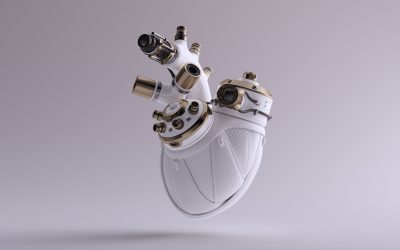
What should one think about organoids, laboratory-produced mini organs?
Scientists have already managed to produce liver, intestine, kidney, heart, retina, and even brain “organoids”. But what are they exactly? They are small three-dimensional biological structures, produced in a laboratory, which “imitate” certain functions of certain organs. In reality, they are not miniature complete organs even if they do achieve certain functions which closely resemble them.
In order to obtain such organoids, scientists use pluripotent stem cells as their starting point, which therefore have the ability to specialise into such and such a type of cells, and have the ability to multiply ad infinitum. When cultivated under certain conditions in vitro, the cells are induced to specialise according to the molecular “orders” given and self-organise thanks to the medium present.
Which stem cells are used to create such organoids ?
2 types of pluripotent cells may be used: Induced pluripotent stem cells (iPSC). These are adult cells collected (blood cells, skin fibroblasts etc.) which are genetically reprogrammed, according to a technique discovered by the Nobel prize-winner Yamanaka. Human embryo cells. Such cells are present at the very earliest development stages of the embryo, a few days after fertilisation. Such cells may be collected from frozen embryos.
Why produce such organoids ?
The research is extremely active, and many nations are investing and betting on the usefulness of these new models. Initially, the aim was to study the development processes and the anatomical organisation of tissues. The 3D culture enabled better understanding of such complex processes. Subsequently, such models began to be used in biomedical research in order to analyse physiological mechanisms and pathological disorders.
Nowadays, they are also used as tools to evaluate the effectiveness or toxicity of certain medicines or other substances. The policies for the reduction of the use of animal models have also acted as a catalyst for such research. These models could also enable a reduction of the risks associated with clinical tests. Such models bear the promise of immense progress of knowledge and open great prospects of therapeutic progress.
There is no doubt that these models will play a crucial role in future research. Moreover, organoids derived from iPS cells make it possible to take into account the genetic diversity of patients and open the possibility of new therapies based on personalised medicine. Note that “Organs and organoids on chips” are the subject of a priority research and equipment programme (PEPR) in the context of the France 2030 plan, with 48 million euros funding to be provided over 6 years.
Spare parts ?
Can one imagine that one day, it could be possible for such organoids, produced in a laboratory, to be used as “spare parts” in the event of an organ failure? For the moment, it is impossible. There remain some uncertainties concerning their micro-architecture and therefore their capabilities. A major difficulty remains in the achievement of a vascular network which enables the irrigation of all the tissues.
Additionally, they are too small, immature, incomplete and difficult to reproduce identically. They are also insufficiently reliable. On the other hand, by coupling these technologies with 3D bio-printing (3D printing of cells and tissues), the assumption that their manufacturing can be improved is already being considered. Certain French laboratories, in particular, are working on the subject.
Organoid chips
Organoid chips have been in full development over the last ten years. This work is at the frontier between microfluidic engineering, microelectronics, biology and medicine. The aim is to “grow” these mini-organoids on standardised chips. These chips are devices intended to reproduce the physiological functions and physical conditions − flows, pressure, movements − encountered in real organs, in order to model different tissues.
By multiplying these devices in series, it is possible to also replicate the interactions between the different organs in an attempt to mimic as closely as possible what happens in an actual healthy or sick organism. Certain of these microfluidic chips include a layer of silicon, which enables the addition of certain other physical measurements. One can then study the reactions of organoid chips by placing them in the presence of various substances (reference medicine, substance under study etc).
Artificial intelligence (AI) provides a major contribution for analysing the data. Using the parameters studied, “specific digital signatures” can be created of the molecules or medicines being tested.
The special case of “mini-brains”
In the laboratory, research scientists have managed to create 3D structures of brain organoids. The first tests date back to 2013, by a team in Lancaster. The current work shows that the constituent cells of the organoid are able to self-organise and communicate with one another, but also to differentiate into several types of cells featuring specific marker functions (for example, the generation of electric pulses or the ability to form a network).
Brain organoids are used to improve our ability to model human neurological development and the diseases which affect it. Among the diseases particularly investigated using these models, are the neuro-developmental and neuro-degenerative diseases, such as microcephaly linked to the Zika virus, Alzheimer’s disease, Parkinson’s disease, autistic spectrum disorders, schizophrenia and bipolar disorders etc.
In order to study the connectivity between the different regions of the brain, it is now also possible to construct “assembloids” by associating organoids simulating different cerebral regions thanks to the diversity of their constituent cells (various types of neurons, astrocytes, microglia or blood vessel cells). Recently, scientists at the John Hopkins university in Maryland announced having successfully created specific cerebral organoids, by combining several human organoids.
According to them, these new models contain 80 % of the types of brain cells, which can be considered to correspond to the 40-day old embryonic stage. These laboratory-cultivated cellular aggregates, although tiny in size (a few hundred microns to a few millimetres for the largest), reproduce certain important characteristics of the foetal human brain which may feature essential developmental, cellular and molecular characteristics.
But for the moment, it is not possible to obtain a “complete” model of the mature adult brain. These cerebroids are limited in size and especially in complexity. Certain types of cells are lacking, the cells die easily, vascularisation is missing.
Nevertheless, ethical questions are plentiful regarding such models. Note that in France, the research into cerebroids is not currently restricted. Cerebroids are considered legally as cultures of human stem cells and therefore, merely subject to a declaration to the Biomedicine Agency or in certain cases subject to authorisation.
Ethical questions
Questions will be asked increasingly, as the research advances, in particular on cerebroids or the creation of human reproductive organs. There is no doubt that such models will be the subject of discussions during the forthcoming revision to the bioethics law. There is as yet no international regulation governing such models. The European Union is funding the Hybrrida project, which intends to elaborate guidelines and an ethical code of conduct on the subject of research on organoids.
The stakes are multiple. First of all, note the exploitation of the human embryo, when that is the starting point for the supply of organoids. Obviously, such research is not in its interests, since it is destroyed. Even if it comes under the scope of the bioethics law, and concerns so-called “supernumerary” embryos – i.e. embryos given over to research by the parents at the root of their creation via an ART procedure – how can one accept that certain lives can be sacrificed for the purpose of advancing knowledge or making therapeutic progress?
That is a very utilitarian vision of human life. Then, comes the question of the status to be assigned to such artefacts produced by biological engineering. They are an “ethical novelty”. They are not mere objects created by mankind. They are created using human cells and tissues. Such entities are “human” and yet are not people, and that confuses our moral frontiers, because under the influence of Roman law, we have become used to dividing the world between people (human beings) and objects. Should they be granted the moral status of the entity which they mimic even partially?
Moreover, as for embryoids, there is the question, already, of the consent and information for the donors of the embryos or cells used subsequently for such experimentation or as iPS stem cells. The protection of genetic data, the health data of the donors and any profits drawn from these models also represent major challenges. At the moment of the donation, the majority of donors are unaware of the way in which their cells are to be used.
Certain possibilities, including these, do not yet exist. One can reasonably expect that certain donors could be opposed to the use of their cells for the elaboration of neuron cells, cerebroids or chimera (a mixing of human and animal cells) if the research project is presented to them. Finally, vertiginous questions come to mind when such cerebral organoids are implanted in animal models.
Experiments have already been conducted. Human cerebroids have been transplanted into the brain of mice, rats and monkeys. Certain of these studies have shown that such grafts can reach maturity, have communicated with other regions of the brain, and could result in behavioural modification of the animal transplanted.
Specific ethical questions relating to cerebral organoids
According to the Academy of Medicine, cerebral organoids are not “mini-brains”. The cellular activities observed cannot be considered as cognitive, sensorial or motor processes specific to the human brain. The suggestion that they possess any sensibility or minimal conscience “represents an abusive and misleading interpretation of the objectives and results of such work”.
Nevertheless, in its letter dated July 2024, headed “Specific ethical questions relating to cerebral organoids” the Biomedicine Agency mentions that in the more or less distant future, cerebroids could be granted the status of “sensitive human entities”. Sensitive, as it cannot be excluded that one day these models could have “the ability to feel pain or a form of basic conscience, in particular the conscience of feeling (the awareness of being in such and such a state). These assembloids would then possess sentience”. The possibility of feeling and an alteration of conscience is often put forward as of particular concern.
Additionally, the creation of man-animal chimera could lead to a modification of the host animal which could acquire a behaviour which is not specific to its species. It could for example develop a greater capacity for solving problems, more complex social interactions. Although such a possibility does not yet exist, it has nevertheless to be considered.
Version originale transmise par Ron et non retouchée